
China travel inspiration
Beijing Zhajiangmian: What’s in It and Where to Try It
Zhajiangmian · China travel guide
Zhajiangmian is a classic Beijing noodle dish and an easy lunch between sightseeing stops. A bowl brings together wheat noodles, a thick bean-paste sauce and crisp vegetables.
The name means “fried-sauce noodles.” It refers to the bean paste, which is fried to make the sauce before it’s spooned over the cooked noodles. Many Beijing recipes fry diced pork belly with the paste.
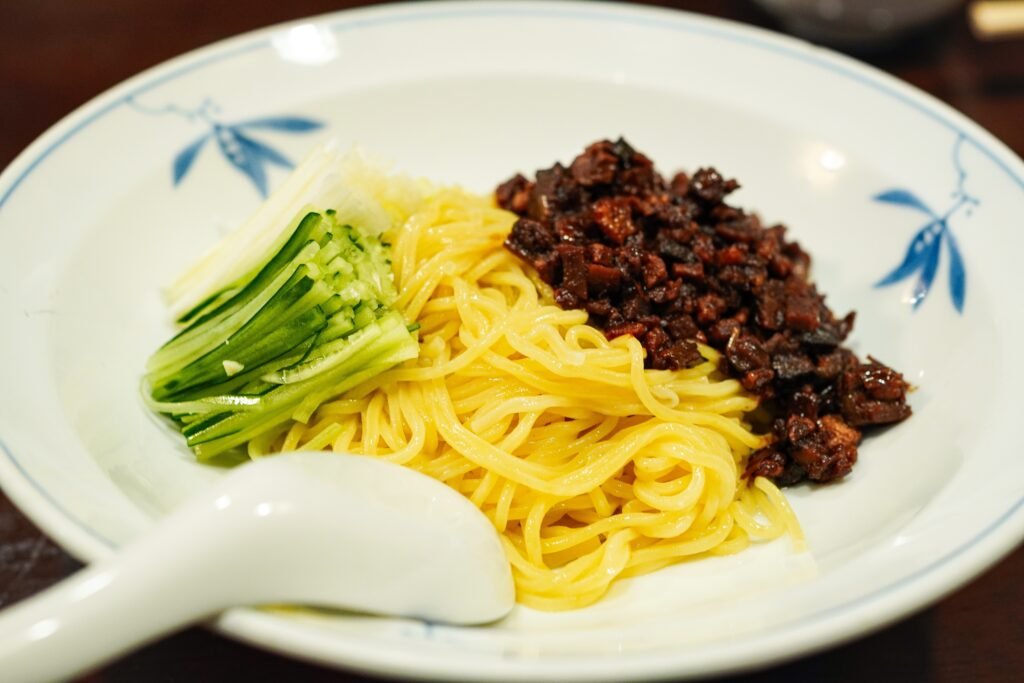
What comes in a bowl of zhajiangmian?
The sauce gets its deep, salty flavor from fermented yellow soybean paste. Some cooks add a sweeter fermented paste. The vegetables vary by season and shop, but you might see thin strips of cucumber or radish, bean sprouts or green soybeans.
The thick sauce clings to the noodles when you toss them. If pickled garlic comes with your bowl, try a little between bites for a sharp, tangy contrast.
How to order zhajiangmian
Look for “zhajiangmian” or “noodles with soybean paste” on the menu. If you see a photo of wheat noodles with thick bean-paste sauce and shredded vegetables, point to it and ask for zhajiangmian. If you’d like to add the sauce yourself, ask, “Could I have the sauce on the side?”
For a vegetarian or halal meal, ask what goes into the sauce before ordering. Pork may already be cooked into it. If you need to avoid a specific ingredient, tell the staff and ask about the noodles, sauce and any shared utensils. Wheat and soy are typical ingredients in this dish.
How to mix the noodles and sauce
If the sauce comes on the side, spoon a little onto the noodles. Lift the noodles from the bottom of the bowl and toss them with the vegetables. Taste a bite before adding more sauce.
If the sauce is already in the bowl, toss the noodles and taste them before adding anything else. For extra heat, ask for chili oil on the side and add a little once you’ve mixed the bean sauce through the noodles.
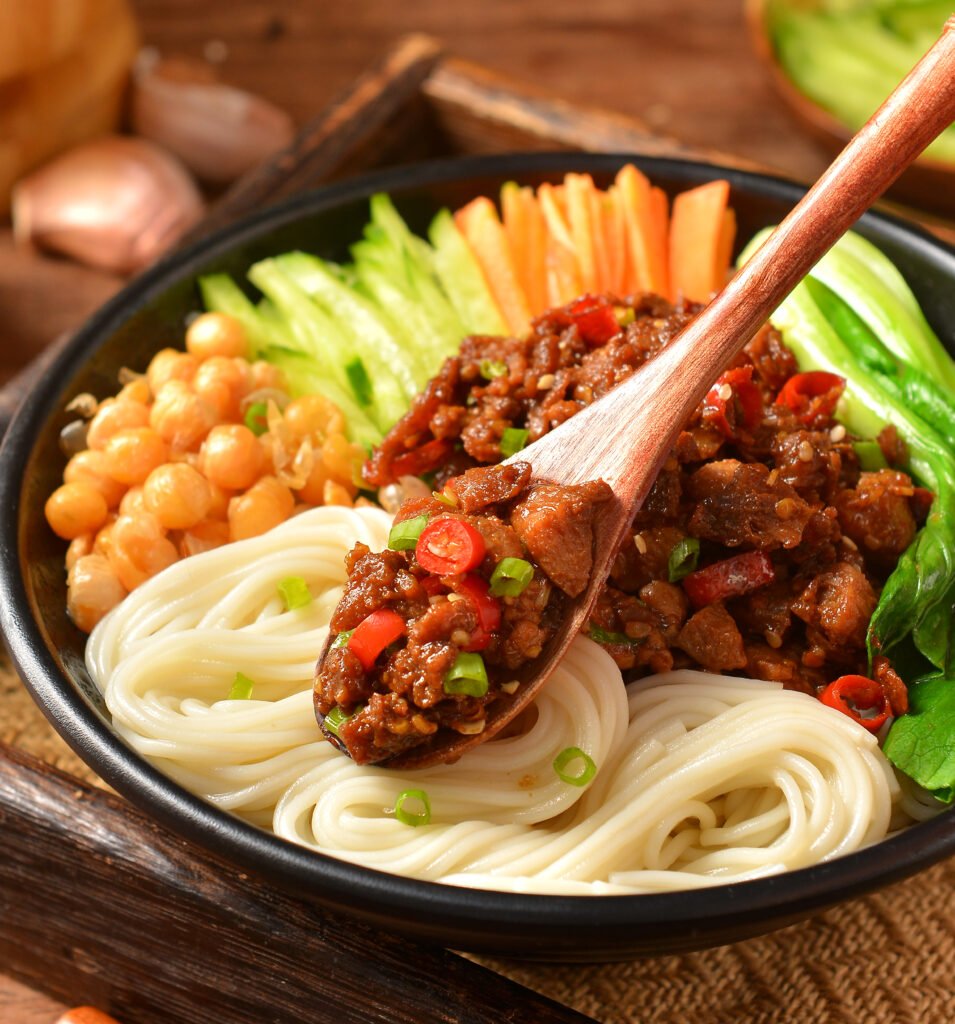
Where to try zhajiangmian in Beijing
If you’re exploring the hutongs around Nanluoguxiang, look for Fangzhuanchang No. 69 at 1 Fangzhuanchang Hutong. The “69” is part of the shop’s name. If you’re visiting the Lama Temple, the shop’s Beixinqiao branch is another option. Check the branch’s opening hours before making a detour.
At a noodle shop, start with one bowl per person and share a side if you’re hungry. A Beijing restaurant with a broader menu gives your group more options if some people want noodles and others want rice or shared dishes.

7-Day Beijing & Zhangjiajie Private Tour
Visit the Forbidden City, Beijing’s hutongs and the Great Wall at Mutianyu before heading to Zhangjiajie. Tell us if you’d like to stop for a bowl of zhajiangmian between sights in Beijing.
If you’re planning a hutong walk or a palace visit, a noodle lunch can fit between stops. Ask TX China Tours where to plan a lunch break if you’re adapting the 7-day Beijing and Zhangjiajie private itinerary.
Common questions about Beijing zhajiangmian
Is it the same as Korean jajangmyeon?
The dishes are related. Beijing zhajiangmian is served with a savory soybean-paste sauce and crisp vegetables. Korean jajangmyeon has its own dark black-bean sauce.
Is zhajiangmian spicy?
The classic bean-paste sauce is usually rich and salty. If you prefer a mild bowl, ask whether the kitchen has already added chili. If chili oil comes separately, you can add it to taste.
Make room for a simple Beijing lunch
Share your travel dates, the areas you’ll visit and any dietary needs. We can suggest where to stop for zhajiangmian and help you ask about the sauce before ordering.

The company providing services to you
TX China Tours is the inbound travel brand of Hunan Tuxiang Tianxia International Travel Co., Ltd, serving international visitors to China. Your booking and travel contract are with this company, which is also responsible for arranging your tour services.