China travel inspiration
Train or Flight in China with Parents and Large Suitcases
Train or Flight in China with Parents and Large Suitcases
China Highlights Zhangjiajie Custom Private China Tours Compare the complete journey, bag handling and confirmed support · Reviewed 29 October 2026

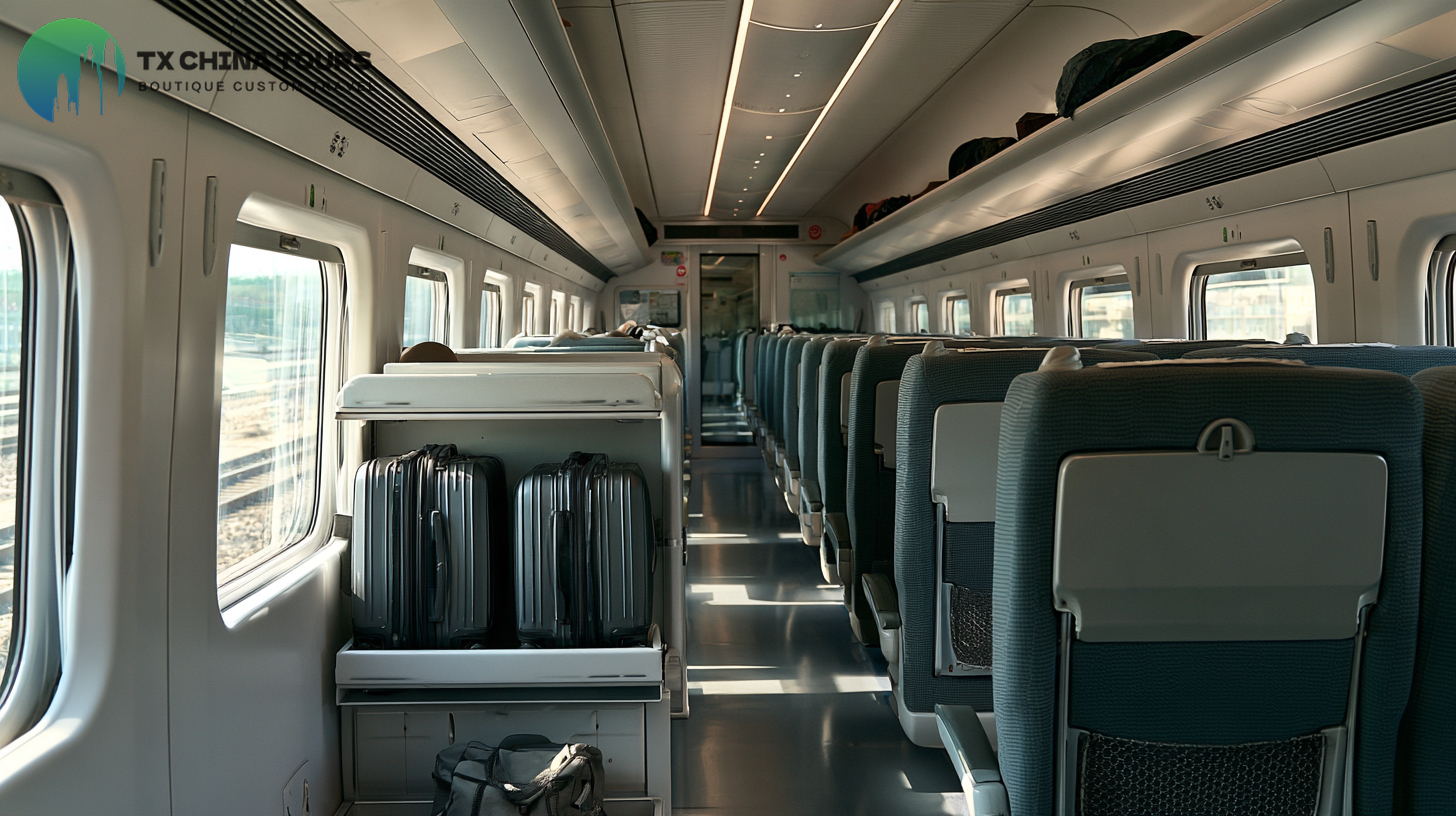


Choose the option your family can manage from one hotel to the next. A direct train can be convenient when the bags meet its rules and someone can handle them through the station. A flight may suit a longer journey or reduce the time spent with a checked suitcase, but adds airport procedures, cabin-bag handling and baggage collection.
Compare the actual services available on your date, your parents’ walking and standing needs, every suitcase and the assistance you can confirm. Scheduled time is only one part of that decision. Ask your parents which parts of travel they find comfortable rather than choosing from age alone.
Compare the same hotel-to-hotel journey
China Highlights Zhangjiajie Custom Private China Tours Start with the two hotel addresses and an actual train or flight you could buy. Write down scheduled times separately from estimates for road traffic, queues and baggage collection. Add the operator’s reporting and boarding deadlines, including any earlier arrival required for assistance.
| Stage | Train | Flight |
|---|---|---|
| Leave the hotel | Checkout, loading bags and the correct station entrance | Checkout, loading bags and the operating airport terminal |
| Before departure | Security, waiting, assistance meeting point and boarding cutoff | Check-in or bag drop, security, assistance and the boarding gate |
| Main journey | The selected train’s dated timetable | The selected flight’s dated schedule |
| Arrival | Platform, lifts or passages, exit and the pickup point | Aircraft exit, possible bus or steps, terminal route and baggage claim |
| Reach the next room | Station-to-hotel transfer and confirmed room-ready time | Airport-to-hotel transfer and the same room-ready requirement |
Add the stages for both options and mark uncertain durations. A station being central does not establish the walking distance inside it, and a short flight does not establish the size of the overall time saving. If the totals are similar, fewer handovers and less standing may matter more than a small difference in the timetable.
Use the exact station or terminal and the current operator’s deadlines. There is no single early-arrival allowance that fits all stations, airlines and assistance arrangements. A sold-out service or one incompatible with the bags is not a workable comparison.
Check walking, standing and steps
For rail, trace the route from the car drop-off to security, the waiting area, gate, platform and carriage. Ask where lifts are located, whether any part requires stairs and where booked assistance meets the traveller. Include the route from the arrival platform to the next car.
For a flight, check the departure and arrival processes with the operating airline. Some services may use a remote stand with a bus or aircraft steps. Describe whether your parent needs help over distance, on steps or all the way to the seat; those are different requirements.
Include queues and standing with hand luggage. A lounge does not remove the steps before reaching it. A direct service can reduce handovers compared with a connection, but the exact route and support still need checking.
Check the bag rules, then assign the work
Weigh every case and measure its external dimensions before buying. Add the smaller bags too. A suitcase accepted on an international flight is not automatically within a high-speed train’s carry-on limits or a separate domestic flight’s fare allowance.
The 12306 English FAQ lists a normal adult free carry-on allowance of 20 kg, a maximum of 20 kg per item, and a 130 cm total of length, width and height per item for EMU trains, the category that includes high-speed services. It lists different dimensions for conventional trains. Check your actual service with China Railway; do not rely on a case being called “large” or on another traveller having taken one aboard.
Airline allowances depend on the operating carrier, route and fare. Air China’s 2026 piece-concept baggage tables, for example, distinguish routes and fare brands; they are not a universal rule for every domestic flight. Check the booked ticket for included checked pieces, weight, dimensions, cabin bags and any excess charge.
| Task | Taking cases onto a train | Checking a case on a flight |
|---|---|---|
| Cars at both ends | Who loads and unloads all cases and mobility equipment? | The same question applies before bag drop and after collection |
| Terminal processing | Who places bags on security equipment and retrieves them? | Who handles checked bags at bag drop and cabin bags at security? |
| Boarding and stowing | Who gets cases into the carriage and an allowed storage area? | Who carries and stows cabin bags while the parent boards? |
| Arrival | Who retrieves cases and manages the platform-to-exit route? | Who collects checked bags and reaches the onward vehicle? |
The number of lifting actions depends on the actual route, equipment and people; it is not a fixed eight-versus-six comparison. If one adult would have to move several heavy cases while assisting a parent, reduce the luggage, confirm separate help or change the route. Do not assume the driver or the person providing mobility assistance will carry bags through the terminal.
Check mobility equipment and batteries separately. The rail FAQ makes an exception for foldable wheelchairs used by passengers with disabilities, but that does not settle the handling of every device. For domestic flights, CAAC’s published power-bank rule prohibits power banks without a clear CCC mark or from recalled models or batches. Ask the operating airline about all current battery, cabin and checked-baggage requirements.
Request the specific assistance needed
The 12306 special-assistance service describes help for eligible passengers needing special care, including people who depend on aids because of age, behaviour or physical condition. Its published process requires valid ticket details, the actual stations and service need, with supporting material where required. The railway checks eligibility; an older traveller should not assume every requested service is automatically included.
Check the current application deadline and follow-up with the actual stations. The published channel has instructions for advance and later requests, and requires separate requests for connecting rail segments. Keep the confirmation and meeting instructions rather than treating a submitted request as the complete arrangement.
Air China distinguishes ground-wheelchair assistance from boarding and cabin support. Its service information also separates wheelchair transport from looking after children or bags. Other airlines have their own arrangements, so confirm with the airline operating each flight, not only the company selling the ticket.
Check every handover at both ends
Tell the provider what help is needed in practical terms: distance, steps, boarding, seating and any mobility equipment. Ask where help starts and finishes, who stays with the parent while another adult handles bags, and whether the arrival end has made a corresponding arrangement.
| Handover | Detail to obtain |
|---|---|
| Hotel to vehicle | Who loads luggage and equipment, and whether the vehicle fits them |
| Vehicle to terminal | Exact drop-off, reporting time, meeting point and reachable contact |
| Terminal to seat | Accepted assistance type, steps and the person responsible for cabin bags |
| Arrival | Meeting arrangement, baggage collection and the onward pickup |
| Next hotel | Final walking, room access and where to wait if the room is not ready |
If a service changes, check whether assistance must be rebooked. Avoid a connection whose practicality depends on unconfirmed help or an optimistic transfer time.
Compare cost and the shape of the day
Add the fare, baggage charges, both transfers and any separately confirmed paid service. Include a room needed for an unusual arrival time. Request a vehicle using the actual number of travellers, cases and mobility devices rather than simply asking for “a large car”.
Then compare the day from waking up to settling into the next room. An early service may mean leaving before breakfast; a late arrival may affect dinner or the pickup. An earlier arrival is useful only when there is somewhere comfortable to wait or rest.
Check change and cancellation terms and the actual alternatives if the service is disrupted. Several scheduled later departures do not guarantee available seats, baggage space or replacement assistance. Keep the next activity flexible until the arrival plan is secure.
Choose the option with a complete plan
Rail can suit a direct journey with manageable, compliant bags and straightforward station access. A flight can suit a longer distance when the fare covers the luggage and the required assistance is confirmed. If neither is manageable, fewer cities or lighter luggage may improve the trip more than changing the mode of transport.
Finish with the next hotel’s location, meal options, room-ready time and a realistic rest period. Use the hotel-night guide for arrivals after midnight if the move crosses the calendar date.
Source and review note: Reviewed on 29 October 2026 using railway, airline and civil aviation information. No dated timetable, fare or assistance availability has been confirmed for a particular trip. Check the current operator’s rules and written arrangements before booking; the comparisons are planning guidance rather than a tested journey or a guarantee of support.

The company providing services to you
TX China Tours is the inbound travel brand of Hunan Tuxiang Tianxia International Travel Co., Ltd, serving international visitors to China. Your booking and travel contract are with this company, which is also responsible for arranging your tour services.