China travel inspiration
Tujia Smoked Pork in Zhangjiajie: What to Order
Tujia Smoked Pork · China travel guide
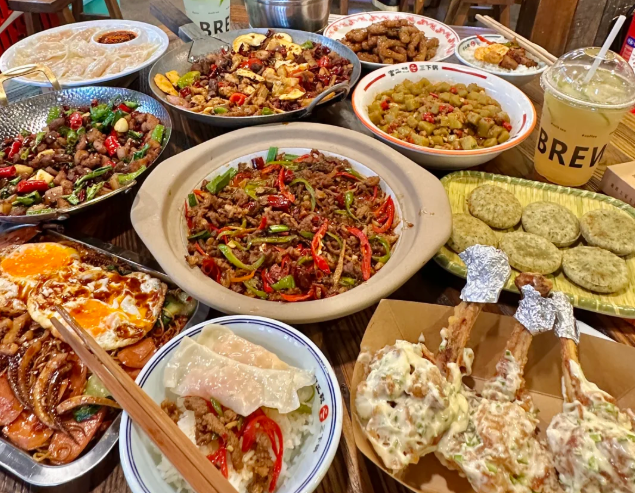
For a first taste of Tujia smoked pork in Zhangjiajie, look for a stir-fry with green garlic or peppers and order rice alongside. The pork is cured and smoky, often with both lean meat and a visible band of fat. A little can give a whole plate its flavor, so it works well as one part of dinner.
On an English menu it may be called smoked pork, cured pork or Tujia bacon. The local term is larou. Think of a savory ingredient used in Chinese cooking, rather than the crisp breakfast bacon you might picture from that translation. Here is how to choose a dish you are likely to enjoy.

What makes Tujia larou different?
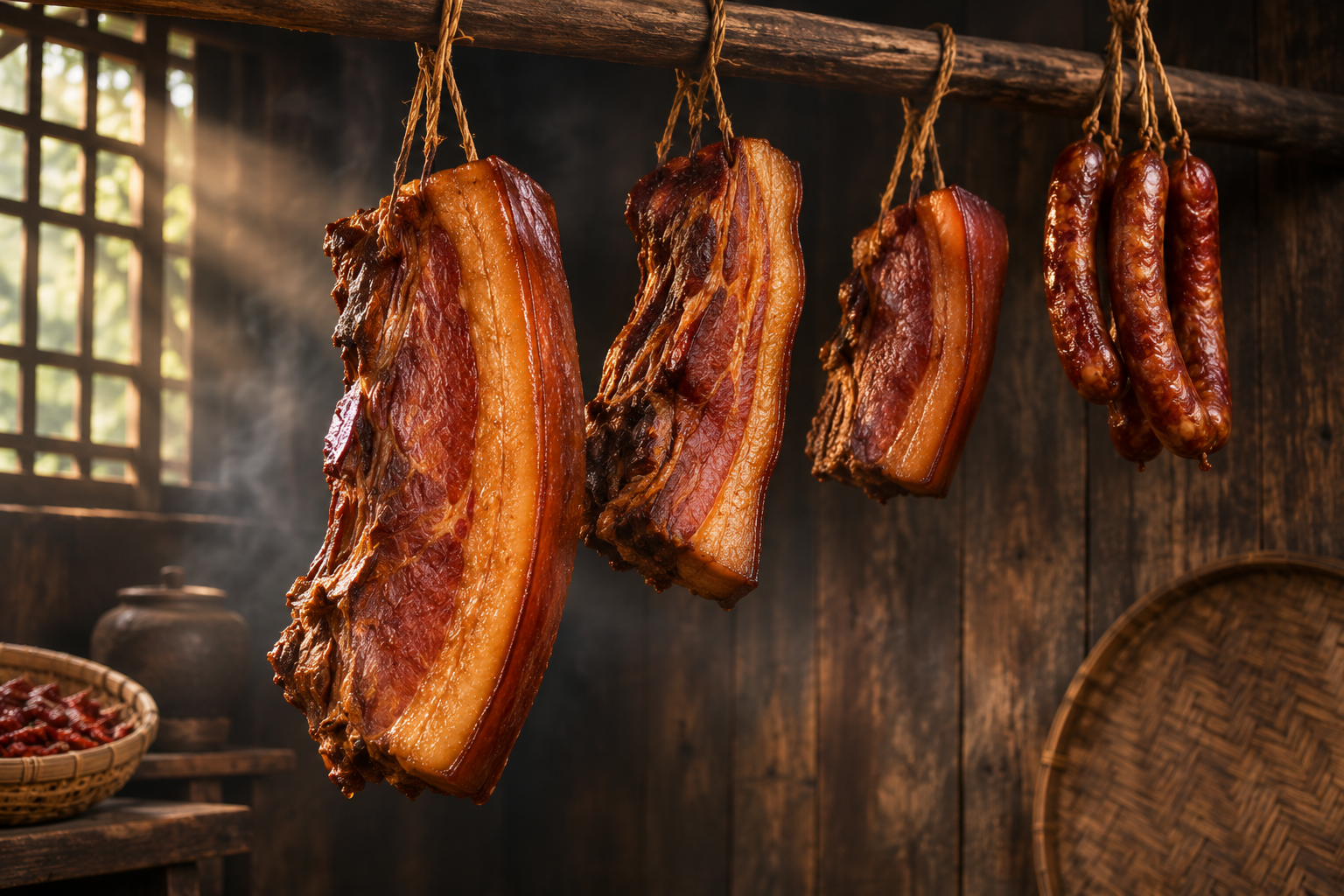
Tujia communities in western Hunan have a tradition of curing pork for winter and the New Year season. Salt and smoke give the meat a concentrated flavor and a firmer texture than fresh pork. The finished taste depends on the cut, preparation and cooking method; it is not one identical product across every household or restaurant.
The lean part can be quite chewy, while the fat softens when cooked and carries the smoke through the dish. If you usually trim every visible piece of fat, choose a small portion or share a plate before deciding how much you want. A thin slice with rice is a simple introduction to the flavor.
In a restaurant, you are ordering a prepared meal. A piece of meat hanging in a shop is a different purchase: curing and smoking do not, by themselves, tell you it is ready to eat. Ask how a product must be prepared rather than treating it as a snack.
Which dish should you order first?
Green garlic with smoked pork makes a useful starting point. Green garlic is the tender leaves and stalks of young garlic, used as a vegetable here. It adds a fresh, garlicky bite alongside the rich meat. English menu translations vary, so ask which vegetable the kitchen uses if you are unsure.
Peppers with smoked pork are another common option. Ask whether the kitchen uses mild or hot peppers and whether it adds dried chili. The color of the peppers in a menu photo will not tell you how spicy the dish is.
Steamed preparations, where offered, give another way to try the meat without choosing a pepper stir-fry. Steaming does not make cured pork unsalted or automatically free of chili. Ask what comes with it and choose according to your preference for texture and seasoning.
Give it a different role from Sanxiaguo
Larou is an ingredient; Sanxiaguo is a mixed pot that may contain it. If you want to taste the cured pork clearly, a dish built around it is a useful choice. If your main interest is sharing several meats together, Sanxiaguo may suit the table better.
You do not need both at the same dinner. Ask what is in the pot before adding a separate pork plate, or try them on different evenings. That leaves room for vegetables and other dishes, and makes it easier to notice what you like about each preparation.
For a simple meal, begin by asking whether a shared pork dish, rice and a vegetable side will be enough for your group. Add more once you know the portions. Richness and saltiness vary, so there is no fixed serving size that will suit every restaurant or appetite.
Add local flavor to your Zhangjiajie evenings
Tell us the dishes you would like to try and any ingredients you avoid. We can discuss a private sightseeing plan with time for dinner near your hotel, rather than rushing between distant restaurants.
Can it be made less spicy or less salty?
Chili and cured-pork flavor are separate questions. A kitchen may be able to omit added chili or use a different vegetable. If you want no heat, ask about fresh peppers, dried chili and any sauce already used in the dish.
Salt is different: it is part of curing the meat, so “less salt” does not turn larou into fresh pork. The kitchen may reduce extra seasoning, but if you prefer very lightly seasoned food, another main dish may be a better choice. You can still try a small shared portion if that appeals to you.
A useful question is: “Can you cook this without added chili, and which vegetables come with it?” Point to the dish on the menu as you ask. If a translation says only “bacon with vegetables,” ask which cured meat and vegetables the restaurant actually means.
When pork is less obvious on the menu
Small pieces of cured pork or rendered pork fat can flavor a dish named mainly for its vegetables. This matters if you avoid pork or want a vegetarian meal. Ask about the cooking fat, stock and sauces as well as the visible ingredients.
For a strict restriction, say it before the kitchen begins. Removing slices from a finished plate will not remove their flavor or ingredients from the rest of the dish. Tujia larou is pork, so it is not a halal choice. A separate dish or another restaurant may be needed; a reassuring English translation is not enough to establish suitability.
When discussing a 3-day private Zhangjiajie itinerary with TX China Tours, mention any local dishes you would like to try. It is easier to leave time for dinner while shaping the sightseeing days than to add a distant restaurant at the last minute.
Enjoy it locally before considering a souvenir
A restaurant dinner is the easiest way to include larou in a short Zhangjiajie stay. Choose somewhere near the hotel you will return to after sightseeing, rather than adding a long drive solely for a particular dish.
If you want to buy packaged pork, look for clear ingredients, preparation instructions, storage conditions and a use-by date. Vacuum sealing does not automatically mean a product can stay in a warm suitcase for the rest of your trip. Buy only if you can follow its storage requirements.
Meat products can also be restricted at your next destination. Check that country’s official customs guidance before buying anything to take across a border, including on a multi-country holiday. Keeping the dish’s name and a photograph is a simpler way to remember it if the purchase would complicate the journey.
Questions about trying Tujia smoked pork
Is larou the same as bacon?
Bacon is a common English translation, but it can suggest a different product and meal. In the Zhangjiajie dishes discussed here, larou is cured pork used in a cooked stir-fry, steamed dish or mixed pot. Ask about the preparation rather than relying on that one word.
What if I dislike fatty meat?
Ask which cut the restaurant uses and look at the actual dish description. Some slices include a substantial layer of fat. A small shared plate lets you try it without making it the whole meal, while a different pork dish may suit you better.
Can I visit a smokehouse?
Food production is not automatically a visitor activity. A household or workshop visit needs the host’s agreement and a confirmed arrangement. Without one, enjoy the finished dish in a restaurant rather than arriving at a working home or business unannounced.
Plan the views, then leave room for dinner
Send your travel dates, group size and food interests to TX China Tours. We can discuss Zhangjiajie days and evenings around your pace, with help asking restaurants about their dishes.
About this guide: we checked published visitor information on 8 November 2026. This is a researched guide, not an account of a recent guided visit. Before booking, confirm the entry rules, services and dietary arrangements for your travel dates.

The company providing services to you
TX China Tours is the inbound travel brand of Hunan Tuxiang Tianxia International Travel Co., Ltd, serving international visitors to China. Your booking and travel contract are with this company, which is also responsible for arranging your tour services.