China travel inspiration
10-Day China Itinerary: Three Routes for First-Time Visitors
10-Day China Itinerary: Three Routes for First-Time Visitors
China Highlights Zhangjiajie Custom Private China Tours Compare a history-and-pandas trip, a slower two-city visit and a scenery route · Reviewed 22 October 2026



For ten days in China, start with either Beijing, Xi’an and Chengdu, or a slower Beijing and Shanghai trip. Choose the three-city version if each stop adds a priority experience. Choose two cities if young children, parents, different walking speeds or fewer hotel changes make extra time in each base more useful.
All examples below mean ten calendar days and nine hotel nights: arrive on Day 1, sleep in hotels on Nights 1–9 and depart on Day 10. They assume suitable international flights into the first city and out of the final gateway. Arrival and departure days are not counted as full sightseeing days. If your flights require a return to the first airport, redesign the final part of the route before booking.
| Route | Nine-night allocation | Best reason to choose it | Main trade-off |
|---|---|---|---|
| Beijing, Xi’an and Chengdu | 4 Beijing + 2 Xi’an + 3 Chengdu | Imperial history, the Terracotta Army and pandas or teahouses | Two substantial intercity travel days; only one full Xi’an sightseeing day |
| Beijing and Shanghai | 5 Beijing + 4 Shanghai | A slower first visit with one major intercity move | Fewer regions, with more time for each city |
| Changsha and Zhangjiajie area | 2 Changsha + 4 Wulingyuan + 2 Zhangjiajie city + 1 Changsha | A scenery-led trip with time for more than one possible forest-park day | Four hotel stays across three hotel areas, including the return gateway night |
China Highlights Zhangjiajie Custom Private China Tours These are planning examples, not tours that have been field-tested by the author. Train availability, attraction reservations and the flights you can actually book determine whether a particular version works.
Route 1: Beijing, Xi’an and Chengdu
This route uses four nights in Beijing, two in Xi’an and three in Chengdu. Keep the main activities on full days and leave the two intercity days available for the complete hotel-to-hotel journey.
| Day | Main plan | Hotel that night |
|---|---|---|
| 1 | Arrive in Beijing, transfer to the hotel and settle in; any short walk is optional | Beijing — Night 1 |
| 2 | Palace Museum / Forbidden City if open and reserved; otherwise swap with Day 4 | Beijing — Night 2 |
| 3 | Great Wall outing at a section and walking level suitable for the group | Beijing — Night 3 |
| 4 | Summer Palace, a museum or a shorter neighbourhood day; retain flexibility for the reserved palace visit | Beijing — Night 4 |
| 5 | Travel to Xi’an on a suitable confirmed service; hotel check-in and an optional nearby dinner | Xi’an — Night 5 |
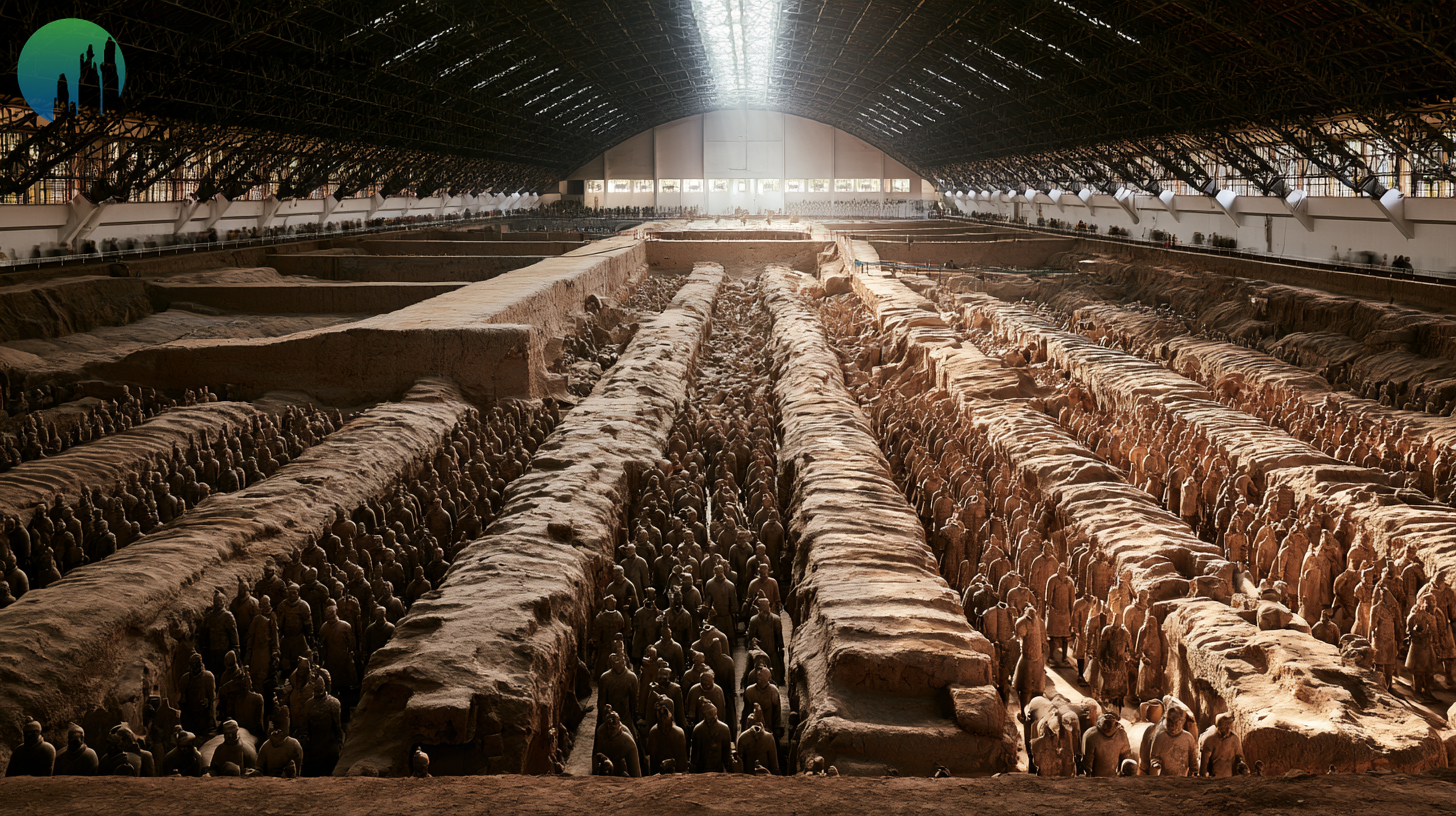
| 6 | Terracotta Army visit; leave the rest of the day flexible | Xi’an — Night 6 |
| 7 | Travel to Chengdu, check in and take a short local outing only if arrival time and energy allow | Chengdu — Night 7 |
| 8 | A reserved panda visit if available, followed by a relaxed afternoon | Chengdu — Night 8 |
| 9 | Choose parks, a teahouse, food or one cultural visit according to the group | Chengdu — Night 9 |
| 10 | Airport transfer and departure from Chengdu; extra sightseeing depends on the actual flight | No hotel night included |
Do not lock the Forbidden City to a day number before checking the weekday and ticket. The Palace Museum’s official visitor page states that it normally closes on Mondays except the stated holiday exceptions and does not sell tickets for the same day’s visit. Arrange the reservation first, then swap the Beijing days as needed.
Xi’an has one full day in this version. If the City Wall and another major museum matter as much as the Terracotta Army, move a night from Beijing to Xi’an and redraw the daily plan. An evening after a train journey is not a substitute for another full sightseeing day.
Search the actual travel dates and exact stations on China Railway 12306. Add hotel check-out, station travel, security, boarding and the arrival transfer to the train time. This guide does not provide a live timetable or promise a specific train duration. Keep Days 5 and 7 clear of prepaid evening events so a later service does not undermine the plan.
Variation: finish in Shanghai instead of Chengdu
If architecture, restaurants, shopping or the return flight make Shanghai the better finish, keep Days 1–6 and replace the final three nights in Chengdu with three in Shanghai. Travel from Xi’an on Day 7, use Days 8 and 9 for the city and depart on Day 10.
Price and time this transfer afresh. A train and a flight use different terminals, luggage rules and hotel transfers; neither is automatically best from a city-centre map. Keep Day 7 as a travel day and use any remaining evening as a bonus.
Three Shanghai nights provide two full days. Pick the experiences that matter most before considering Suzhou, Hangzhou or a theme park. A large day trip can use one of those days; it should replace a city activity rather than being added to an already full programme.
Route 2: Beijing and Shanghai at a slower pace
Stay in Beijing for Nights 1–5 and Shanghai for Nights 6–9, with the intercity move on Day 6. This gives four full Beijing days on Days 2–5 and three full Shanghai days on Days 7–9.
Use three Beijing days for the priority visits and keep one for rest, a closure adjustment or a slower outing. Avoid putting the Great Wall next to another demanding day solely to complete a list. In Shanghai, combine neighbourhoods, the riverfront and selected indoor visits. Keep any day trip optional until the group has experienced the pace.
Compare rail and flights for Day 6 using the whole journey, including both hotel locations. Check the departure station or airport, luggage arrangements and arrival transfer. A day without a major attraction can still be useful travel time; it does not need a paid evening show to feel complete.
This version is often easier to adapt when walking speeds differ. A stable hotel base makes a shorter outing possible for part of the group, provided everyone has a contact method and clear return arrangements.
Route 3: Changsha and the Zhangjiajie area
For scenery, use Changsha as the gateway only if it fits the flights available to you. This example has nine nights: two in Changsha, four near the Wulingyuan forest-park area, two in Zhangjiajie city and one back in Changsha. It changes hotel three times, so it is not the lowest-movement alternative.
| Days | Plan | Nights |
|---|---|---|
| 1–2 | Arrive in Changsha, settle in and use Day 2 for the city | 2 Changsha |
| 3–6 | Transfer to Wulingyuan on Day 3; use Days 4–6 for two main park days and one flexible day | 4 Wulingyuan |
| 7–8 | Move to Zhangjiajie city on Day 7; visit Tianmen Mountain on Day 8 only if open and reserved | 2 Zhangjiajie city |
| 9 | Return to Changsha and sleep in the departure gateway | 1 Changsha |
| 10 | Transfer to the airport and depart | No hotel night included |
Wulingyuan and Tianmen Mountain are separate sightseeing areas. The Hunan tourism authority’s Tianmen Mountain introduction places its cableway’s lower station in downtown Zhangjiajie. Check the exact hotel, park entrance, booked route and transfer rather than treating every “Zhangjiajie” address as the same base.
Confirm each attraction’s current admission, internal transport and closure terms separately. The flexible day is useful only if tickets and transport can move too. If direct international flights through Zhangjiajie suit your route, compare a redesigned arrival or departure to remove unnecessary backtracking. Do not assume that those flights operate on your dates.
The last Changsha night creates time between the return transfer and the international flight, but it does not guarantee protection from disruption or separate-ticket costs. Check the tickets’ conditions and the actual connection before adding a last-minute activity on Day 9.
Check whether the extra stop is worth the move
Compare two- and three-city plans using the same usable arrival and departure dates. Mark every hotel check-out, station journey and check-in, then count the full mornings left in each place. Keep a third city when it adds something the group values enough to justify that movement.
| Question | If the answer is no |
|---|---|
| Does it add a priority experience? | Give its nights to the existing bases |
| Is a suitable dated connection available? | Change the city order or remove the stop |
| Does the stay include enough usable sightseeing time? | Shorten the attraction list or stay longer |
| Can everyone manage another luggage day? | Keep fewer bases and use optional local visits |
Put recovery time beside the demanding days
Leave a relaxed period after an intercity move, a long museum visit or a mountain day. For parents or children, rest is more useful near the demanding activity than saved until the final afternoon. Check meals, toilets, walking distance and a practical route back to the hotel.
If some travellers want a longer visit, split into subgroups only where each has a contact method, an accompanying adult where needed and clear return arrangements. A complicated intercity transfer is a poor time to separate the party merely to preserve every attraction.
Check the final booking against all nine nights
Compared with a seven-day, six-night trip, this ten-day, nine-night definition adds three nights. Use that time for a worthwhile third stop or deeper visits and recovery in two cities. The gain is smaller when another long transfer is added.
Before paying, list all nine hotel nights and check every transport date against them. Confirm attraction reservations and weekly closures, entry permission for your passport and route, hotel arrival arrangements, and the final flight connection. If either international flight changes, recount the usable days before keeping the same attraction list.
Use the destination comparison to choose the stops, the budget guide to price the trip and the preparation checklist for practical arrangements.
Source and review note: Reviewed on 22 October 2026. The routes are editorial examples with explicit night counts, not confirmed departures or first-hand tour reports. Consult the 12306 ticketing guidance and current operator notices, and verify actual trains, flights, admission and service terms for your dates.

The company providing services to you
TX China Tours is the inbound travel brand of Hunan Tuxiang Tianxia International Travel Co., Ltd, serving international visitors to China. Your booking and travel contract are with this company, which is also responsible for arranging your tour services.