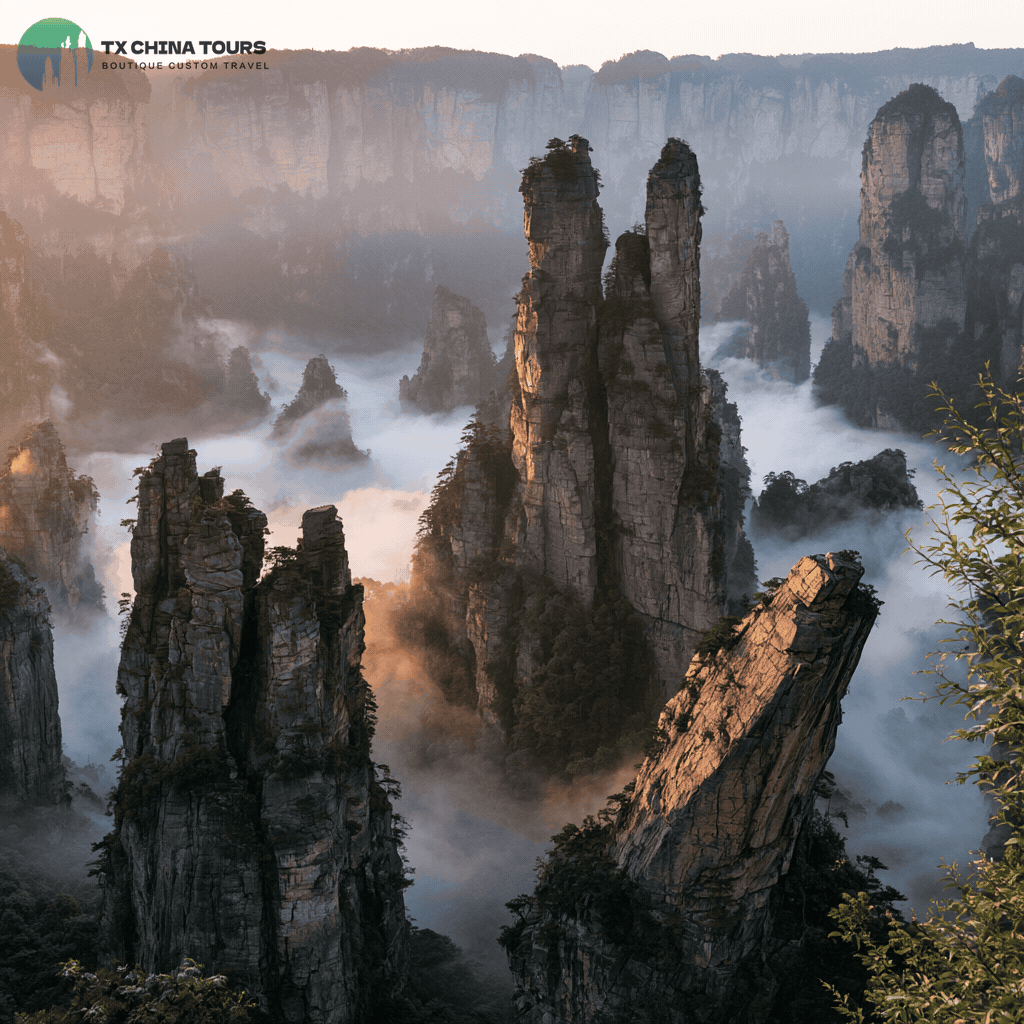
Mist can separate the Zhangjiajie mountains into layers, but it can also hide them completely. The same conditions that make a photograph atmospheric may leave a distant viewpoint blank. Plan for what you can see on the day, rather than building the visit around a guaranteed “floating mountain” moment.
Distinguish mist from a usable view
At a lookout, first check whether you can identify nearby pillars, then whether more distant ridges are visible. Broken mist may reveal and conceal shapes while you wait. Persistent low cloud can remove the larger panorama. Neither a photograph from a previous visitor nor a seasonal description can tell you which of these you will encounter.
UNESCO’s landscape description includes cloud and mist, but it is not a forecast. For Zhangjiajie weather, check a current local forecast before departure and any scenic-area notices before entering. Ask about conditions at the upper viewing areas, not only the sky outside your hotel.
Read a forecast in layers: whether conditions may affect safe access, whether precipitation calls for extra protection, and whether the outlook suggests useful distant views. A general rain icon cannot tell you that one particular lookout will be clear at a particular hour. Likewise, a clear sky at your accommodation is only one observation. Ask for an update before committing to a transfer whose main purpose is a long-distance panorama, and keep any change within the conditions of your booked admission.
If the views are clear
Give your priority panorama time. Walk along the permitted viewing path and compare several angles instead of stopping only where the largest group is gathered. A nearby pillar may separate more clearly from the background a few steps farther along. Keep enough flexibility to enjoy a good view without immediately leaving for the next name on your list.
Tianzi Mountain and Yuanjiajie can fit into an upper-area day; the geopark’s route guide links them using scenic transport. Adding every optional stop is a separate decision. Clear weather does not remove queues, walking or the need to reach your descent before services finish.
If mist is moving through
Choose a place where waiting is comfortable and does not block the path. Take a photograph when the arrangement of visible pillars interests you; there is no need to hold out for the exact image you saw online. Set a personal waiting limit based on the day’s remaining transport and walking. Move on when waiting begins to compromise the return journey.
While waiting, choose a nearby shape as a reference. If it appears and disappears, you can see that visibility is changing without continually comparing the scene with an edited image on your phone. Photograph the arrangement that is visible, including a close pillar or a strip of forest. Keep the camera ready without occupying the best viewing space indefinitely. If the scene remains blank, taking a break or moving to the next permitted viewpoint can be a better use of the visit.
If the panorama stays hidden
Consider whether a shorter viewing circuit or a valley-focused day would still meet your interests. Golden Whip Stream can shift attention toward trees, water and nearby rock faces, but it is not an all-weather guarantee. Rain, trail restrictions or unsafe conditions can also affect valley walks. Follow current staff instructions.
Make an alternative plan about a specific experience: a shorter woodland walk, close views of rock and vegetation, or an earlier return. Do not simply add more transport in the hope that another named area must be clear. Before changing levels, establish the extra journey and the route back. A weather adjustment is successful when it leaves the group comfortable and able to enjoy what is accessible, even if the original panorama never appears.
Keep cameras and phones protected, carry a layer for exposed waiting, and wear footwear with useful grip. Hunan’s winter travel advice specifically highlights warm clothing, slip-resistant shoes and weather-related changes to scenic hours.
If your trip has two park days, keep the order flexible where your ticket and reservations allow. The two-day pacing plan pairs an upper-area day with a valley day, giving you a more varied visit even when visibility is imperfect.