A good Zhangjiajie itinerary gives each major outing a clear purpose.
Grand Canyon and Glass Bridge
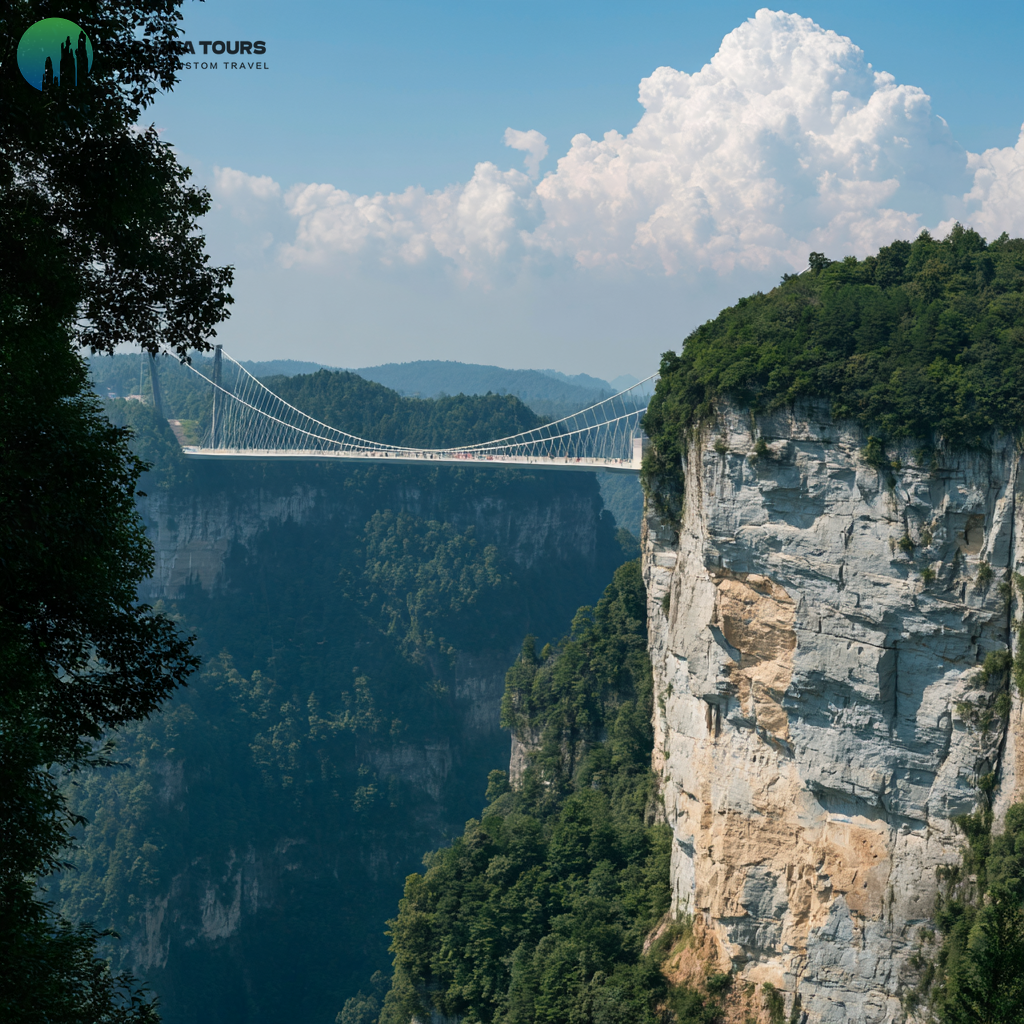
The Grand Canyon adds a bridge-and-canyon experience to a trip; it does not replace the sandstone scenery or a separate visit to Tianmen Mountain. Decide which experience matters most before allocating the days.
Start with your main priority
If the bridge is essential, give Zhangjiajie Grand Canyon a protected place in the schedule rather than leaving it as an uncertain stop before departure. The provincial destination guide identifies the canyon’s bridge and landscape as one scenic-area outing.
If the pillar scenery is the main reason for the trip, protect your time in Zhangjiajie National Forest Park and the wider Wulingyuan landscape first. UNESCO’s overviewexplains that setting. Add the canyon when it offers something your group wants, not merely another famous name to tick off.
An example with four full sightseeing days
This sequence excludes arrival and departure days. It is a planning example, not a timed or bookable package.
On a small screen, scroll the table sideways.
| Day | Focus | Planning purpose |
|---|---|---|
| 1 | A selected forest-park route | Begin with the scenery that motivated the trip. |
| 2 | A different forest-park area or a lighter day | Avoid forcing every desired viewpoint into one outing. |
| 3 | Grand Canyon and the selected bridge product | Allow for the full route, food and a comfortable return. |
| 4 | Tianmen Mountain, if wanted | Keep the separate mountain visit distinct from the canyon. |
Reverse or adjust this sequence around hotel arrangements and available admissions. The Tianmen Mountain introduction helps identify that separate destination; check its current route before committing to a specific transport sequence.
Make the overnight plan agree with the sightseeing plan
Four full sightseeing days normally require time on both sides for arrival and departure. In this example, arriving the evening before day one and leaving the morning after day four creates five overnight stays. That is the arithmetic of this sample, not a minimum stay rule. If your transport schedule differs, adjust the number of usable sightseeing days before booking hotels.
Put the hotel beside each night, then write the next morning’s starting point below it. This makes a proposed move visible as a real sequence of checkout, luggage handling, transfer and check-in. If changing hotels does not simplify that sequence, keeping one base may be the more comfortable option even when one excursion involves a longer journey.
If you have fewer days
Choose which experience to omit before compressing all of them. With a limited schedule, one satisfying main visit can be better than a day dominated by transfers and admission deadlines. For a mixed-age party, preserve meal and rest time when making that choice.
If combining attractions is important, ask for a proposal showing each journey and the complete sightseeing allowance. Then test it against the slowest comfortable walking pace in the group. A private vehicle cannot create extra opening hours.
Coordinate the canyon day
Match the booked product to the official Grand Canyon route diagram and agree the endpoint with your driver. If this is also a hotel-change day, decide where luggage stays and how it reaches the next property.
Keep a separate buffer before any onward train or flight. A day ending at a hotel is easier to adjust than one tied to an inflexible departure. When conditions change, review ticket and supplier terms before assuming you can swap days without cost.
Leave room for a change in the planned experience
Conditions can affect the reason for choosing a day, not just its timetable. For example, a notice on Tianmen’s October 2026 arrangements reports that the long cableway stopped operating from 13 October, with reopening to be announced. A traveler interested chiefly in that ride should reconsider the purpose of the Tianmen day rather than assume a rearranged date guarantees it.
Keep one clear priority for each outing and identify what could be omitted without spoiling it. On the canyon day, that might mean choosing the confirmed bridge-and-canyon visit without adding another attraction. If you later rearrange days, check all affected reservations together, including hotel transfers and luggage plans. Flexibility is most useful when the practical consequences of a change are understood.
hotel-base guide to reduce unnecessary packing, and the attraction comparison to set priorities before requesting a private-trip proposal.