China travel inspiration
Top 10 China Attractions for First-Time Visitors
Choosing attractions for a first trip to China involves more than identifying famous landmarks. The Great Wall, the Forbidden City, the Terracotta Army and China’s major natural landscapes are spread across different provinces, so travel distances and available time affect which destinations can realistically fit into one itinerary.
A practical approach is to combine attractions within the same region before adding destinations that require longer transfers. This guide introduces 10 representative China attractions, explains their historical or geographical significance, and identifies the differences that matter when planning a first visit.
How We Selected These China Attractions
The selection considers four factors — cultural or historical significance, distinctive natural features, visitor accessibility and value within a first China itinerary.
The list covers several different aspects of the country.
- Imperial history and archaeology — The Great Wall, the Forbidden City and the Terracotta Army represent different stages of China’s political and military development.
- Urban history — The Bund illustrates Shanghai’s transformation from a treaty port into a major international financial center.
- Natural landscapes — The Li River, Zhangjiajie and Jiuzhaigou represent different geological environments.
- Cultural landscapes — West Lake and Suzhou’s classical gardens show how traditional Chinese landscape design combines natural features with human intervention.
- Wildlife conservation — Chengdu Research Base of Giant Panda Breeding introduces visitors to scientific research and managed conservation programs.
These attractions are not equally easy to combine. Beijing and Xi’an form a practical historical route, while Zhangjiajie and Jiuzhaigou require separate regional travel arrangements. The best selection therefore depends on the time available, physical requirements and interests of each traveler.
Which China attractions would you like to explore?
From the Great Wall and the Terracotta Army to Zhangjiajie’s mountains and Guilin’s river landscapes, tell us which places interest you. We can help arrange a private China itinerary based on your travel time, interests and preferred pace.
Top 10 China Attractions for First-Time Visitors
1. The Great Wall of China
Location — Beijing and other northern provinces
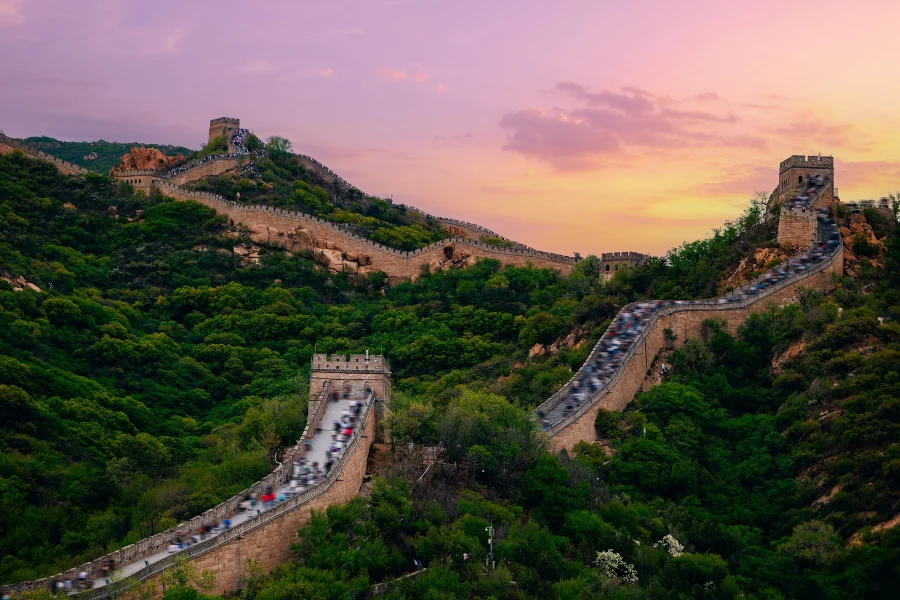
The Great Wall developed over many centuries as a network of defensive fortifications along China’s northern frontier. Its structures include walls, watchtowers, passes and other military installations built to monitor movement and defend strategically important routes.
Around 220 B.C., Qin Shi Huang ordered existing defensive walls to be connected and expanded into a more unified system. Construction continued under later dynasties, and many of the best-preserved sections visible today date from the Ming Dynasty (1368–1644). The Great Wall is therefore not a single structure from one historical period, but a collection of fortifications that reflect changing military needs.
What Visitors Can Expect
The sections near Beijing provide the most convenient access for many international visitors, but they offer different walking conditions.
- Mutianyu has restored wall sections, mountain views and cable car facilities. It is a practical option for visitors who want to experience the wall without completing a long mountain hike.
- Badaling has extensive visitor facilities and convenient access. Its popularity can also mean heavier visitor traffic, particularly during national holidays.
- Jinshanling has a longer, more rugged route with restored and unrestored sections. It is more suitable for visitors interested in extended walking and less developed surroundings.
The physical character of the wall is important when choosing a section. Steps can be steep, surfaces uneven and elevation changes substantial, even where cable cars reduce the initial climb.
Practical Travel Considerations
Allow half a day to a full day, depending on the section and walking route. Mutianyu is a useful choice for travelers prioritizing accessibility, while Jinshanling requires more time and physical preparation.
Spring and autumn generally provide comfortable walking conditions. During summer, heat and direct sunlight can make exposed sections more demanding.
Travelers combining the Great Wall with other Beijing landmarks can compare the 9-day Beijing, Xi’an and Zhangjiajie tour, which connects northern China’s historical sites with a separate mountain destination.
2. The Forbidden City
Location — Beijing
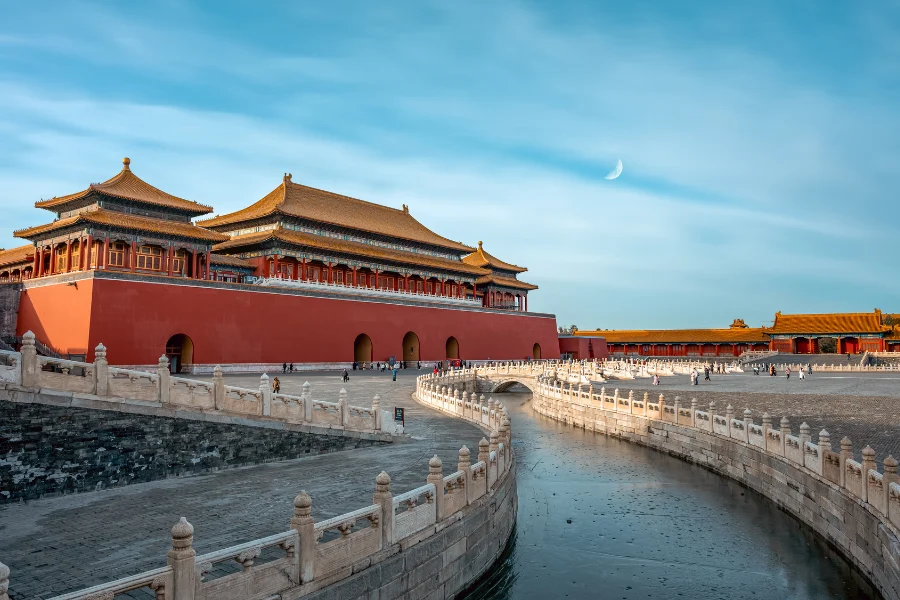
The Forbidden City, now known as the Palace Museum, served as the imperial palace of the Ming and Qing dynasties. Completed in the early 15th century, it remained the principal imperial residence and administrative center until the end of China’s imperial system in 1912.
Its central axis, formal courtyards, elevated halls and carefully arranged gates reflect the hierarchy of traditional imperial government. The arrangement separated public ceremonies and administrative functions from more private residential areas.
The Hall of Supreme Harmony was the principal ceremonial hall. Important events, including imperial enthronements and major state celebrations, took place there.
What Visitors Can Expect
The main north-south route passes through several important palace buildings and courtyards. The Hall of Supreme Harmony, Hall of Central Harmony and Hall of Preserving Harmony illustrate the ceremonial organization of the imperial court.
Beyond the central buildings, side courtyards and residential sections provide a different view of palace life. Architectural details such as glazed roof tiles, painted wooden structures, stone terraces and decorative motifs also reveal how imperial status was expressed through design.
Jingshan Park, directly north of the palace, provides an elevated view of the complex. It is a useful addition for visitors interested in understanding the overall layout rather than examining individual buildings alone.
Practical Travel Considerations
Allow approximately three to four hours for a general visit. Visitors interested in the museum collections and additional palace sections may need longer.
The Palace Museum requires advance, real-name ticket reservations. International visitors can use their passports, and tickets are released seven days before the visit. Same-day ticket purchases are not available.
The museum generally closes on Mondays, except for statutory holidays. Check the official Palace Museum visitor information before departure because ticketing and access arrangements can change.
The Forbidden City is usually combined with other central Beijing attractions rather than treated as a separate day trip. Travelers planning a wider Beijing visit can refer to the Beijing destination guide.
3. The Terracotta Army
Location — Xi’an, Shaanxi Province
The Terracotta Army forms part of the Mausoleum of the First Qin Emperor, who unified China in 221 B.C. The figures were created as part of the emperor’s funerary complex, reflecting the belief that imperial authority and military protection would continue after death.
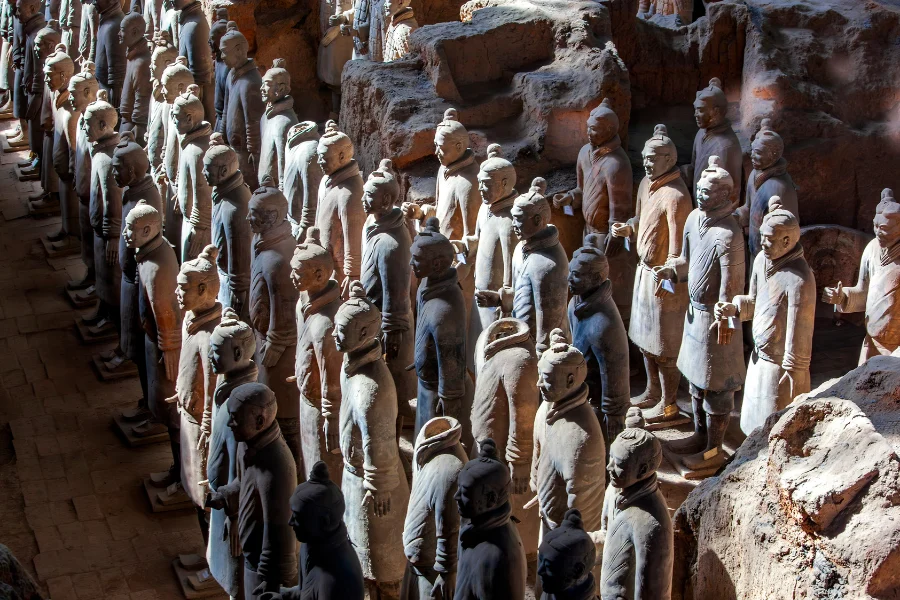
Discovered by local farmers in 1974, the site contains thousands of life-size terracotta soldiers, horses and other funerary objects. Their arrangement in military formations provides archaeological evidence of Qin-era military organization and equipment.
Individual warriors differ in facial features, hairstyles, armor and position. These variations reveal the scale of the production process and the craftsmanship involved in creating the figures.
What Visitors Can Expect
Pit No. 1 is the largest excavation area and contains extensive formations of infantry figures. Other pits reveal different military arrangements and unfinished or damaged archaeological remains.
Visitors view much of the excavation from elevated platforms. This arrangement allows them to see the original archaeological context rather than viewing all the figures as separate museum objects.
The site is also relevant to understanding the Qin Dynasty’s centralized political system. Military organization, standardized administration and large-scale construction were closely connected to the expansion of imperial authority.
Practical Travel Considerations
Allow approximately three to four hours for the excavation pits and museum exhibitions. The mausoleum complex is outside central Xi’an, so visitors need to account for road travel in both directions.
The attraction can be visited throughout the year, although summer heat and holiday crowds may affect the pace of sightseeing. Consider combining the visit with other Xi’an historical sites rather than scheduling several distant attractions on the same day.
For travelers interested in connecting the Terracotta Army with Beijing’s imperial landmarks and Zhangjiajie’s mountain scenery, the 9-day Beijing, Xi’an and Zhangjiajie itinerary provides one possible regional combination.
4. The Bund
Location — Shanghai
The Bund is a historic waterfront district along the Huangpu River. Its buildings reflect Shanghai’s development as an international trading and financial center during the late 19th and early 20th centuries.
After Shanghai became a treaty port in 1843, foreign commercial institutions, banks and trading companies established operations in the city. Foreign settlements and concessions influenced the area’s commercial organization and architectural development, within the unequal political and economic conditions of that period.
The historic buildings feature several European architectural styles, including Gothic, Baroque and Neoclassical designs. Their former functions included banking, trade, administration and other commercial activities.
Across the Huangpu River, Lujiazui in Pudong presents a contrasting urban landscape of modern skyscrapers and financial institutions. The two waterfront districts illustrate different stages of Shanghai’s development.

What Visitors Can Expect
During daylight, visitors can examine the architecture and understand how the historic waterfront was organized around commercial institutions. Walking along the promenade also provides views of the river and the Lujiazui skyline.
After dark, the illuminated buildings and modern skyline become more prominent. These two viewing periods offer different perspectives on Shanghai’s historic and contemporary urban development.
Nearby attractions such as Yu Garden and Nanjing Road can be incorporated into a broader city visit, although they require additional walking and transportation time.
Practical Travel Considerations
Allow approximately one to two hours for the waterfront walk. The promenade is relatively flat, making it less physically demanding than mountain or large heritage attractions.
Spring and autumn generally provide comfortable walking conditions. Visitors with limited time can combine the Bund with nearby central Shanghai attractions rather than scheduling a separate full day.
The 3-day Shanghai city highlights tour provides an example of how the Bund can fit into a wider visit that includes Yu Garden, Nanjing Road and Shanghai Tower.
5. The Li River and Yangshuo
Location — Guilin and Yangshuo, Guangxi Zhuang Autonomous Region
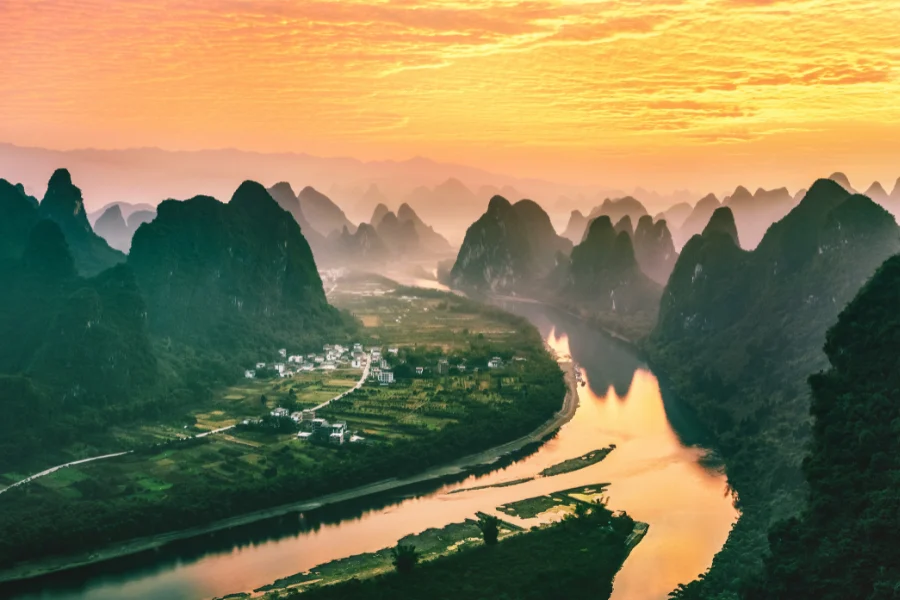
The Li River is known for its limestone karst landscape, characterized by steep hills, river valleys, caves and rural settlements. These formations developed through the gradual dissolution of limestone by water over long geological periods.
The Guilin region forms part of the South China Karst World Heritage property. Its tower karst formations are particularly recognizable because individual limestone hills rise prominently above the surrounding plains and waterways.
Guilin and Yangshuo offer different ways to explore this landscape. Guilin functions as a major transportation and accommodation center, while Yangshuo provides closer access to rural scenery and outdoor activities.
What Visitors Can Expect
A Li River cruise between Guilin and Yangshuo passes limestone peaks, villages and agricultural areas. The longer river journey provides a broad view of the landscape, while shorter excursions focus on selected sections.
Around Yangshuo, visitors can explore the countryside by bicycle, walk through rural settlements or visit areas along the Yulong River. These activities offer a closer experience of the agricultural landscape than a river cruise alone.
The Li River and Yulong River should not be confused. They are separate waterways with different excursion routes and visitor experiences.
Practical Travel Considerations
Allow one to two days, depending on whether you include an overnight stay in Yangshuo. A river cruise requires relatively little physical effort, while cycling and countryside walks involve more activity.
Cruise departure points, schedules and river conditions can affect the available route. Check the specific itinerary before booking rather than assuming every cruise follows the same section.
For travelers who want to combine southern China’s karst scenery with Zhangjiajie’s sandstone mountains, the 7-day Guilin and Zhangjiajie tour connects Guilin, Xingping, Yangshuo and Zhangjiajie.
6. Zhangjiajie National Forest Park
Location — Zhangjiajie, Hunan Province
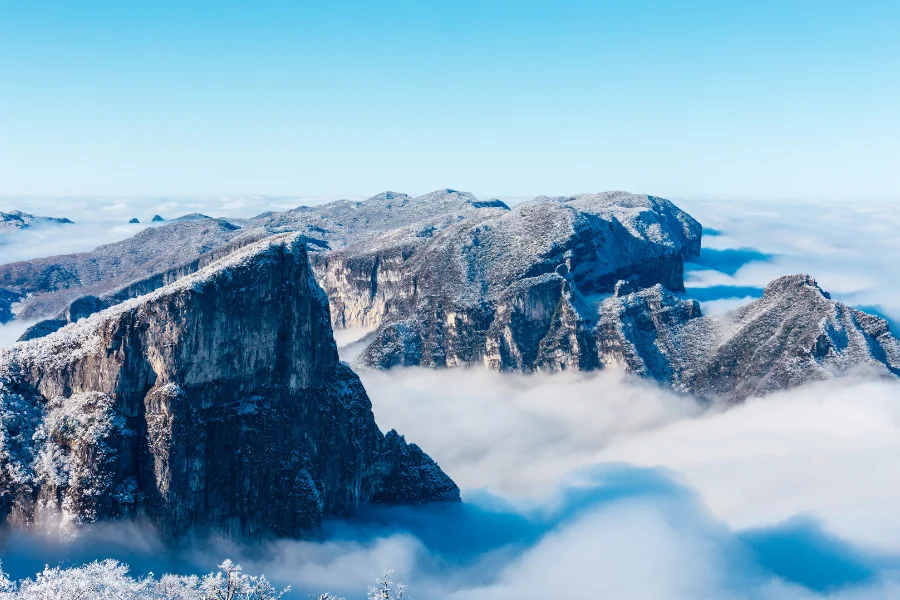
Zhangjiajie is known for its quartz sandstone pillar landscape. The broader Wulingyuan Scenic and Historic Interest Area is a UNESCO World Heritage property covering mountains, ravines, forests, streams and distinctive rock formations.
The area contains more than 3,000 narrow sandstone pillars, many rising over 200 meters. Their formation involved geological uplift, weathering and erosion over extended periods.
The landscape became more widely recognized internationally through its visual association with the floating mountains depicted in the film Avatar. However, its geological history and ecological features are the reasons for its heritage significance.
What Visitors Can Expect
Zhangjiajie National Forest Park contains several distinct viewing and walking areas.
- Yuanjiajie is known for elevated viewpoints and closely grouped sandstone pillars.
- Tianzi Mountain offers broader views across the surrounding peaks and valleys.
- Golden Whip Stream follows a lower valley route through forested scenery, providing a different perspective from the elevated viewpoints.
Tianmen Mountain is a separate scenic attraction with its own entrance and transportation arrangements. It should not be confused with Zhangjiajie National Forest Park, even though both are located in Zhangjiajie.
The broader Wulingyuan area also includes additional scenic sections. Visitors need to account for internal shuttle transportation, cable cars, walking routes and possible queues when deciding how much to cover in one day.
Practical Travel Considerations
Allow two to three days for the main national park areas. A separate visit to Tianmen Mountain requires additional time.
The park involves stairs, slopes and changes in elevation. Cable cars, elevators and shuttle buses can reduce some walking, but they do not eliminate the need to walk between viewpoints.
Spring and autumn are popular for outdoor sightseeing. Weather conditions can affect visibility, so visitors should avoid scheduling every major viewpoint into a single day.
The Zhangjiajie destination guide provides additional information about the area’s scenic sections. Travelers who want to combine the forest park, Tianmen Mountain and other local attractions can also review the 4-day Zhangjiajie tour itinerary.
7. Chengdu Research Base of Giant Panda Breeding
Location — Chengdu, Sichuan Province
The Chengdu Research Base of Giant Panda Breeding is an institution focused on giant panda research, breeding, conservation and public education. It provides a managed environment where visitors can observe pandas while learning about the scientific work associated with their protection.
Giant pandas are native to mountain forests in parts of Sichuan, Shaanxi and Gansu. Their survival depends on suitable forest habitats and bamboo availability, making habitat conservation an important part of long-term protection efforts.
A visit to the research base is different from observing pandas in the wild. Visitors see animals in managed facilities, where care, feeding and breeding arrangements are subject to conservation and animal welfare requirements.

What Visitors Can Expect
The base has designated outdoor and indoor enclosures. Which areas are accessible and how active the pandas appear can vary according to weather, animal management and individual behavior.
Interpretive displays explain panda development, feeding habits, reproduction and conservation research. Red pandas may also be included in designated visitor areas.
Pandas often feed or move around during cooler parts of the day, but activity is not guaranteed. Temperature, age, health and individual behavior all influence what visitors observe.
Practical Travel Considerations
Allow approximately two to three hours, including walking between the different enclosures. An early visit may improve the opportunity to observe active animals, although it does not guarantee a particular experience.
Follow enclosure rules, avoid disturbing animals and respect photography restrictions. The base should be understood as a conservation and research institution rather than a wildlife park designed around guaranteed animal encounters.
Chengdu can also be combined with other destinations in Sichuan and neighboring regions. The 12-day Chengdu, Jiuzhaigou, Chongqing and Zhangjiajie tour provides one example of a longer itinerary connecting panda research, mountain scenery and urban destinations.
8. West Lake
Location — Hangzhou, Zhejiang Province
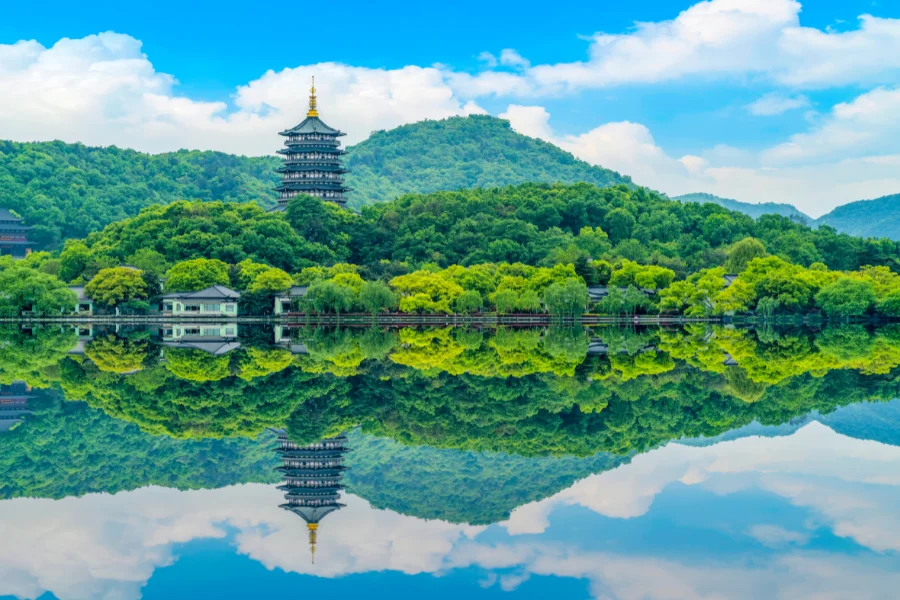
West Lake is a cultural landscape shaped by centuries of interaction between natural geography, public works, literature and traditional landscape design. Its significance comes from the relationship between the lake and its surrounding built environment, rather than from the water alone.
Causeways, islands, bridges, temples, pagodas and landscaped areas were developed or modified during different historical periods. The arrangement of these features created views that became important subjects in Chinese poetry and painting, particularly during the Tang and Song dynasties.
UNESCO recognizes the West Lake Cultural Landscape of Hangzhou for its influence on landscape design and its representation of traditional Chinese ideas about the relationship between people and nature.
What Visitors Can Expect
Visitors can explore the lake through walking paths, causeways, boat rides and viewpoints. Different areas reveal different relationships between water, hills, historic buildings and planted landscapes.
The Ten Scenes of West Lake are named views associated with particular landscape compositions and seasonal conditions. They reflect how poets and artists interpreted the lake through light, weather, vegetation and architectural features.
West Lake is best explored selectively rather than by attempting to cover every section on foot. Visitors can choose a few important viewpoints and use boats or local transportation to connect more distant areas.
Practical Travel Considerations
Allow half a day to a full day, depending on whether you prefer a short lakeside visit or a more extensive exploration. Walking routes can be combined with boat transportation to reduce the distance covered on foot.
Spring and autumn generally provide comfortable conditions, although the landscape changes throughout the year. Visitors interested in photography may want to allow time for different viewpoints rather than relying on a single lakeside location.
West Lake can be combined with Suzhou and Shanghai within an eastern China itinerary. The 13-day Beijing, Suzhou, Hangzhou, Shanghai and Zhangjiajie tour provides one example of this regional combination.
9. Suzhou Classical Gardens
Location — Suzhou, Jiangsu Province
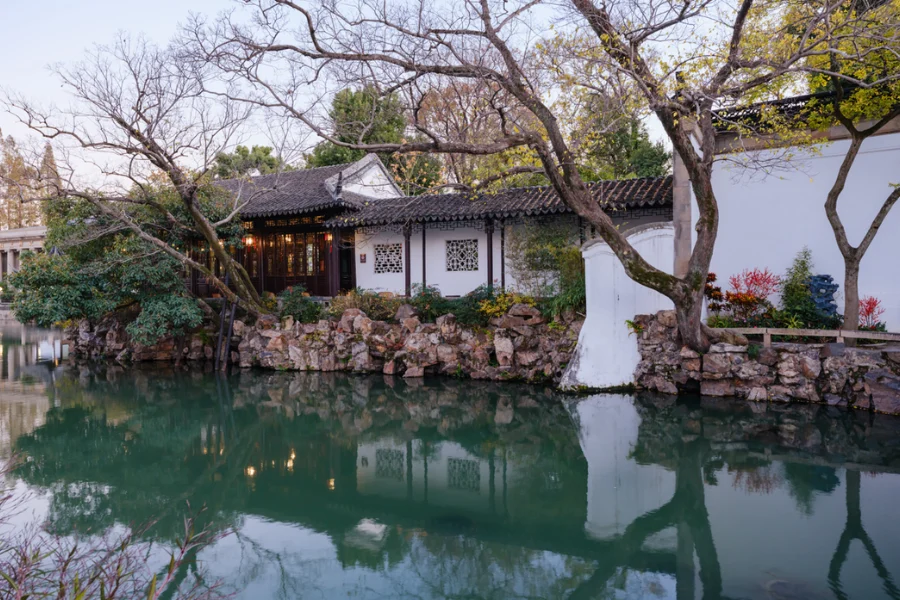
Suzhou’s classical gardens represent a tradition of private garden design associated with scholars, officials and wealthy families. Unlike large imperial gardens, many were developed within relatively limited urban spaces, using architecture, water, rocks and plants to create miniature representations of natural landscapes.
UNESCO recognizes nine classical gardens in Suzhou. The Humble Administrator’s Garden and the Lingering Garden are among the most widely visited examples.
Their design reflects a cultural approach in which nature is not simply reproduced at a smaller scale. Instead, selected landscape elements are arranged to create changing views and a sense of depth within an enclosed space.
What Visitors Can Expect
The Humble Administrator’s Garden is known for its extensive water features, islands, pavilions and interconnected garden spaces. The Lingering Garden uses a more varied sequence of courtyards, corridors, rock formations and architectural details.
Several design principles help explain how these spaces work.
- Borrowed scenery incorporates views beyond the garden boundaries into the overall composition.
- Framed views use windows, doorways and corridors to direct attention toward particular landscape features.
- Spatial sequence reveals different sections gradually as visitors move along curved paths and through connected courtyards.
- Water and rock composition creates miniature representations of mountain and water landscapes.
These features are easier to understand during a visit when viewed as part of the garden’s overall spatial arrangement, rather than as separate decorative objects.
Practical Travel Considerations
Allow approximately two to three hours for one major garden. Visiting multiple gardens can provide useful comparisons, but their design principles are easier to appreciate when sufficient time is allowed at each location.
Stone paths, bridges and narrow corridors require some walking. Visitors with mobility limitations should consider the layout of the selected garden before planning a visit.
Suzhou is commonly combined with Hangzhou and Shanghai because of their geographic proximity and high-speed rail connections. The 13-day eastern China itinerary includes these destinations within a wider China journey.
10. Jiuzhaigou Valley
Location — Northern Sichuan Province
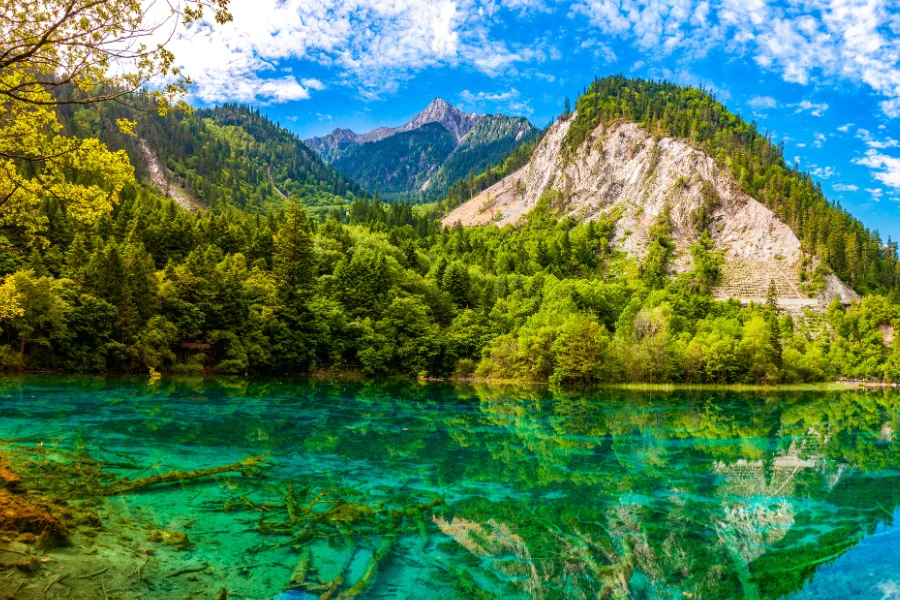
Jiuzhaigou Valley is a protected natural area known for its lakes, waterfalls, forested mountains and distinctive geological formations. Its landscape developed through a combination of tectonic uplift, glacial activity and limestone-related processes.
Mineral-rich water contributes to the colors of many lakes. Water depth, mineral composition, aquatic vegetation and surrounding light conditions all influence their appearance.
The valley contains several forest ecosystems and provides habitat for wildlife, including endangered species. Its ecological significance contributed to its UNESCO World Heritage recognition.
What Visitors Can Expect
Five Flower Lake is known for its clear water and varying colors, while Nuorilang Waterfall is one of the valley’s major natural landmarks. The scenic area also contains interconnected valleys with lakes, forests and mountain views.
The experience differs from Guilin’s limestone hills and Zhangjiajie’s sandstone pillars. Jiuzhaigou is characterized more by its combination of high-altitude lakes, waterfalls and forest ecosystems than by a single dominant geological formation.
The valley is located at a relatively high elevation compared with China’s major lowland cities. Visitors unfamiliar with altitude may notice changes in physical comfort, particularly when walking for extended periods.
Practical Travel Considerations
Allow one full day inside the scenic area, in addition to the time needed to reach Jiuzhaigou and return to your accommodation. Shuttle buses connect major sections, reducing the need to walk the entire valley.
Autumn is known for its changing foliage, while spring and summer offer different combinations of water, vegetation and mountain scenery. Weather conditions can change, so check local forecasts and scenic area access information before departure.
Jiuzhaigou is better planned as part of a broader Sichuan journey rather than as a short excursion from central Chengdu. The 12-day Chengdu, Jiuzhaigou, Chongqing and Zhangjiajie itinerary illustrates one way to combine these destinations with additional regional travel.
How to Plan Your First China Sightseeing Trip
The 10 attractions are spread across several provinces, and their travel requirements differ considerably. Grouping destinations by region helps reduce unnecessary transfers and leaves more time for sightseeing.
Beijing and Xi’an — Imperial History and Archaeology
Beijing and Xi’an form a practical combination for travelers interested in China’s imperial history.
Beijing’s main attractions include the Forbidden City and the Great Wall, while Xi’an provides access to the Terracotta Army and other remains of the ancient capital. High-speed trains connect the two cities, making them a common combination within a first China itinerary.
Allow approximately six to eight days for both cities if you want to visit the main attractions without rushing. This range includes time for transportation and city sightseeing, although the final schedule depends on arrival and departure arrangements.
For travelers who want to extend the route to Zhangjiajie, the 9-day Beijing, Xi’an and Zhangjiajie tour offers a broader combination of historical and natural attractions.
Shanghai, Hangzhou and Suzhou — Urban History and Classical Landscapes
Shanghai, Hangzhou and Suzhou are located in eastern China and can be combined through high-speed rail connections.
Shanghai introduces modern urban development through the Bund and Lujiazui. Hangzhou offers the cultural landscape of West Lake, while Suzhou provides a closer look at classical garden design.
Allow approximately five to seven days if you want time to explore all three destinations. The exact allocation depends on whether you prioritize Shanghai’s urban attractions, Hangzhou’s lakeside scenery or Suzhou’s gardens.
The 13-day Beijing, Suzhou, Hangzhou, Shanghai and Zhangjiajie itinerary includes all three eastern China destinations within a longer multi-region journey.
Guilin and Yangshuo — Southern China’s Karst Landscapes
Guilin and Yangshuo are commonly visited together because of their access to the Li River and surrounding karst scenery.
A river cruise, a visit to Xingping and time exploring the Yangshuo countryside can form the main part of a regional itinerary. Allow approximately three to four days if you want to combine river sightseeing with outdoor activities and an overnight stay in Yangshuo.
Travelers with additional time can extend the journey to Zhangjiajie. The 7-day Guilin and Zhangjiajie tour provides one example of this combination.
Chengdu and Jiuzhaigou — Wildlife and Mountain Landscapes
Chengdu and Jiuzhaigou offer different experiences within Sichuan Province.
Chengdu provides access to the giant panda research base, regional cuisine and urban cultural attractions. Jiuzhaigou offers alpine lakes, waterfalls and forested mountain scenery.
Allow approximately five to seven days for both destinations, depending on the transportation arrangements and time spent in each location. Jiuzhaigou requires a separate journey from Chengdu, so it should not be treated as a short city excursion.
The 12-day Chengdu, Jiuzhaigou, Chongqing and Zhangjiajie tour provides an example of a longer route connecting these destinations.
Zhangjiajie is in Hunan Province and should be planned as a separate regional extension. Although it can be combined with Sichuan destinations in an extended itinerary, the additional transportation time needs to be considered.
How Many Days Should You Allow?
The appropriate trip length depends on the number of regions included, transportation choices and sightseeing pace.
- 7 to 10 days — Focus on two or three major destinations, such as Beijing, Xi’an and one additional city.
- 10 to 14 days — Combine historical cities with one natural or cultural region, such as Guilin or Zhangjiajie.
- 15 to 21 days — Allow time for several regions, potentially including Beijing, Xi’an, eastern China and a natural destination.
These ranges are planning guidelines rather than fixed schedules. International arrival and departure times, intercity transfers and the physical demands of individual attractions can all affect the final itinerary.
Practical Tips for Visiting Attractions in China
Check Reservation Requirements Before Departure
Some major attractions use real-name ticket reservations and daily visitor limits. The Palace Museum, for example, requires advance booking and identification matching the reservation.
Do not assume that every attraction follows the same booking system. Check official websites for ticket release dates, opening schedules, temporary closures and identification requirements.
Match Sightseeing Plans to Physical Requirements
The walking conditions vary considerably between attractions. The Forbidden City involves extensive walking across large courtyards, while the Great Wall and Zhangjiajie may include steep steps and uneven paths.
Jiuzhaigou also requires visitors to consider the effects of higher elevation. Travelers who prefer less strenuous sightseeing can use cable cars, shuttle buses and boat transportation where available, but these facilities do not eliminate all walking.
Consider Regional Weather Differences
Beijing has cold winters and hot summers, while Guilin and Hangzhou generally have more humid conditions. Mountain destinations such as Zhangjiajie and Jiuzhaigou can experience changing temperatures and visibility.
Check the forecast for each destination rather than relying on a single national weather summary. This is particularly important when outdoor viewpoints and mountain routes are central to the itinerary.
Plan Intercity Transportation
High-speed rail is useful for many journeys between major cities, particularly in eastern and central China. Domestic flights can be more practical for longer distances, while private transfers may help reach attractions outside city centers.
Compare the complete journey rather than just the train or flight duration. Transfers to stations and airports, waiting time and onward transportation can significantly affect the time available for sightseeing.
For international visitors, the China high-speed train guide explains the main booking and travel considerations.
Prepare Digital Payments and Communication
Mobile payment platforms are widely used in China for transportation, dining and everyday purchases. International visitors can review available overseas card options and complete account setup before departure.
A reliable mobile data connection, translation tools and offline copies of important travel information can also help when navigating stations, attractions and local services.
Follow Site-Specific Visitor Rules
Historical buildings, museums and protected natural areas may have different photography, access and conservation requirements. Follow posted instructions, avoid touching protected objects and remain on designated paths in natural scenic areas.
These restrictions help protect archaeological remains, historic architecture and sensitive ecosystems.
Choosing the Right Attractions for Your First Visit to China
The most suitable China attractions depend on what you want to understand and how much time you have. The Great Wall and Forbidden City provide different perspectives on imperial power, while the Terracotta Army offers archaeological evidence of the Qin Dynasty’s military organization and funerary practices.
The Bund, West Lake and Suzhou’s classical gardens reveal different aspects of urban and cultural development. The Li River, Zhangjiajie and Jiuzhaigou offer distinct natural environments, while Chengdu’s panda research base introduces visitors to wildlife conservation.
Rather than trying to visit all 10 attractions, select destinations that complement one another geographically and culturally. A route built around two or three connected regions usually provides more time to understand each place and less time spent transferring between distant destinations.
FAQs
What Are the Top 10 Attractions in China for First-Time Visitors?
The Great Wall, Forbidden City, Terracotta Army, Bund, Li River, Zhangjiajie National Forest Park, Chengdu Research Base of Giant Panda Breeding, West Lake, Suzhou Classical Gardens and Jiuzhaigou Valley represent different aspects of China’s history, culture, urban development and natural geography. The most suitable selection depends on available travel time and regional preferences.
How Many Days Do You Need to Visit China’s Main Attractions?
A 10- to 14-day trip provides a reasonable starting point for visiting several major destinations. Travelers with seven to 10 days may prefer two or three cities, while those with three weeks can include additional natural and cultural regions. Transportation time should be included when estimating the schedule.
What Is the Best Time to Visit China’s Attractions?
Spring and autumn generally provide comfortable conditions for many outdoor attractions, but the best period varies by region. Autumn is particularly known for foliage in Jiuzhaigou, while mountain destinations and southern river landscapes have their own seasonal weather patterns. Check the conditions for each destination before choosing travel dates.
Which China Attractions Require Advance Reservations?
The Palace Museum requires advance, real-name ticket reservations, and visitors must use the identification document associated with their booking. Other major attractions may also use advance booking or visitor limits, particularly during holidays. Always check the relevant official ticketing system before departure.
Are China’s Major Attractions Suitable for Older Travelers?
Many major attractions have visitor facilities, but physical accessibility varies. The Forbidden City involves extensive walking, while the Great Wall, Zhangjiajie and Jiuzhaigou may include stairs, slopes or higher elevations. Cable cars, shuttle buses and boats can reduce some physical demands, but visitors should consider individual mobility and stamina when choosing destinations.
Can You Visit Zhangjiajie and Jiuzhaigou in the Same Trip?
Yes, but they are in different provinces and require separate transportation arrangements. Zhangjiajie is in Hunan Province, while Jiuzhaigou is in northern Sichuan. Including both is more practical on an extended itinerary than on a short first visit.

The company providing services to you
TX China Tours is the inbound travel brand of Hunan Tuxiang Tianxia International Travel Co., Ltd, serving international visitors to China. Your booking and travel contract are with this company, which is also responsible for arranging your tour services.